
One year in Tonga, a lifetime in the Pacific: Dr Robert Early's volunteer story
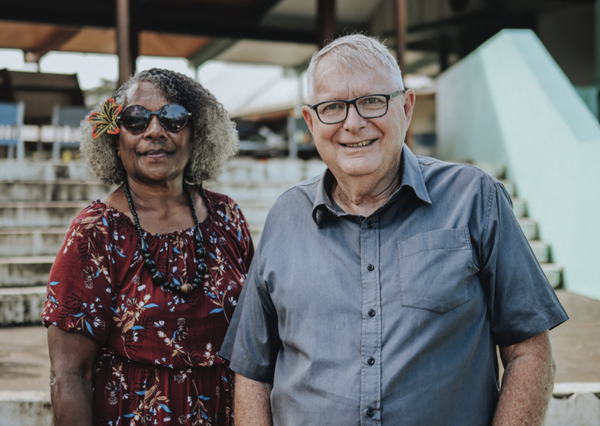
At age 17, Dr Robert Early thought he knew where his life was heading. Growing up in Wellington, with a civil engineer for a father and several science subjects behind him at Tawa College, he was expecting to follow a similar path into engineering. However, in his last year of college, he heard about an opportunity with Volunteer Service Abroad Te Tūao Tāwāhi (VSA). It was 1970, and VSA was running a cadet programme that enabled young New Zealanders to spend a year overseas, often supporting schools experiencing teacher shortages. For Robert, who had recently discovered an interest in travel and was questioning whether he wanted to move directly from school into university, the opportunity offered another possibility.
At just 17 years old, Robert left New Zealand for Tonga. Robert was placed at Tupou College, a Methodist boys’ boarding school in a rural area outside Nuku’alofa, teaching English and mathematics. With little formal preparation and students who were sometimes older than he was, it was a significant step into the unknown. “I got given an eraser, some pieces of chalk and a few teaching manuals and away we went,” he recalls. More than five decades later, Robert can draw a clear link from that year to the life and career that followed. “My VSA experience in Tonga …really did change the course of my life,” he says.
Discovering a different path
Living in Tonga introduced Robert to another way of seeing the world. He was particularly drawn to Tongan culture and language and began learning to speak it, discovering how language could open a deeper understanding of people, culture and community. It also challenged some of the assumptions he had grown up with. “It was just a fabulous, eye-opening experience to see another part of the world and how people in that context make sense of their lives,” he says. “There was a great dignity and acceptance of life as they found it in their culture through their ways of doing things and their ways of being.”
When Robert returned to New Zealand, engineering no longer felt like the path for him. His experience in Tonga had sparked a growing interest in languages, linguistics and Pacific cultures. He went on to study linguistics, beginning a journey that would eventually take him back to the Pacific and shape more than five decades of living and working with the languages of Polynesia, Melanesia and Micronesia.
In 1981, Robert moved with his then wife and two young children to Vanuatu, where he began working alongside communities on language development. For around a decade, the family lived in a remote village while Robert worked with local speakers to learn languages, develop writing systems and support literacy and Bible translation projects. That work ultimately became the foundation of a career spanning more than four decades.
A career dedicated to Pacific languages
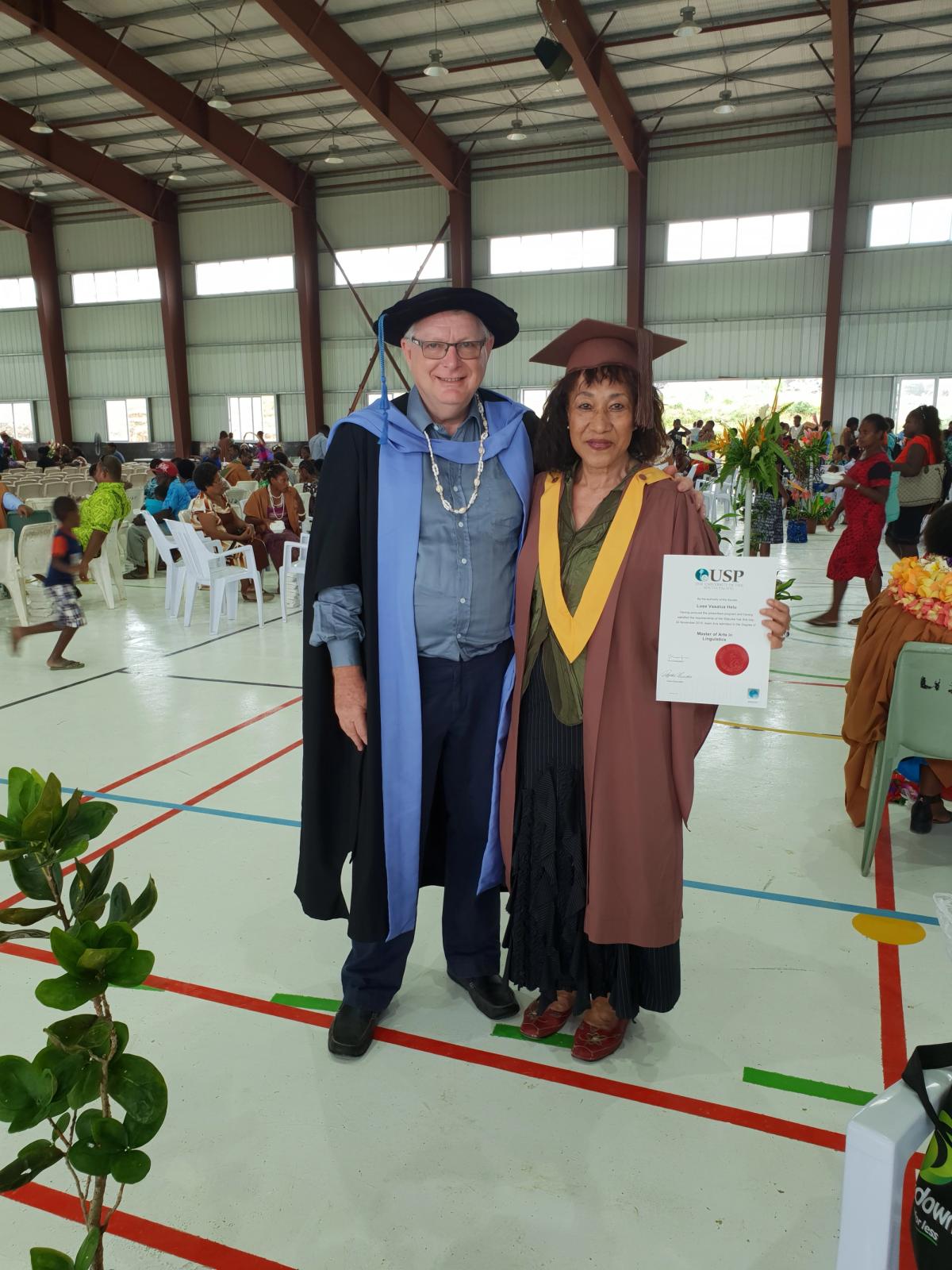
In 1996, after completing his PhD in linguistics at the Australian National University, Robert joined the University of the South Pacific (USP) in Vanuatu, where he later became the Associate Professor of Pacific Language Studies. Through USP and other partnerships, he has contributed to language documentation, literacy and educational initiatives across Vanuatu, Niue, Tonga, Solomon Islands, Tuvalu, Kiribati, the Federated States of Micronesia, the Marshall Islands and elsewhere in the Pacific.
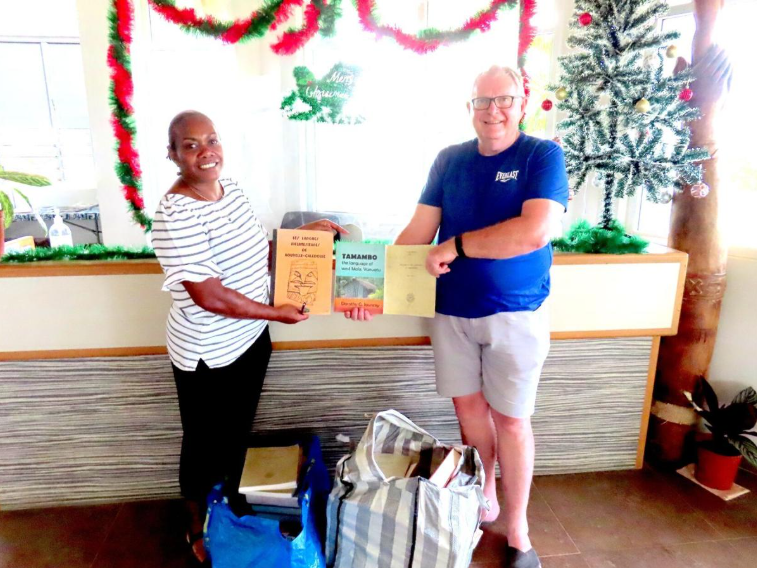
His work has included grammatical studies of the Lewo language for his PhD and collaboration with Pacific language experts and communities to develop dictionaries, thesauruses, school resources and other language materials.
Among the projects he is particularly proud of is a monolingual Niuean dictionary, developed alongside Niuean language experts, in which both the words and their definitions are presented in Vagahau Niue. He also helped develop a Niuean thesaurus and worked on projects producing early literacy resources like readers and school dictionaries across more than 50 languages in Vanuatu and 8 languages in Micronesia.
As a recognised expert on Vanuatu’s national language, Bislama, he also enjoys teaching this language to successive New Zealand High Commissioners and other personnel who come to work in Vanuatu.
For Robert, the work has always been grounded in partnership. “Things like the importance of relationship, the importance of collaboration, the importance of respecting what each other party brings to the table,” he says, are among the lessons Pacific communities have reinforced throughout his career. He remains deeply conscious that Pacific languages face significant pressures, particularly as English becomes increasingly dominant throughout education, the internet and social media. Strengthening local languages, he says, matters because each carries its own ways of understanding and expressing the world, and is a precious treasure to those who speak it. “Every language is unique and special and different and has its own features which make it interesting and valuable,” he says.
The value of stepping beyond the expected path
Looking back, Robert believes one of the most significant lessons from his year volunteering through VSA was discovering that, even at a young age and without professional qualifications, he had something to contribute. “It provided a platform where I felt that even as a young person…there were things that I could do to help, I could contribute and I could do things that other people valued,” he says. That idea of service has remained a thread throughout his life.
Robert’s experience is also a reminder that volunteering does not necessarily need to fit neatly within an existing career plan. For a young person considering what to study, someone exploring a change in direction, or simply for any person wanting to experience life from another perspective, volunteering can create space to learn from others, build relationships and discover interests they may never have encountered otherwise. Robert left New Zealand expecting eventually to become a civil engineer. He returned with questions and interests that would shape the next five decades of his life.
Today, after a lifetime of learning from and working alongside communities across the Pacific, his advice remains simple. “To learn a language well and to successfully integrate into another community is a huge challenge. But it’s worth every bit of effort that you can put into it.”