
Giving back through digital transformation in Samoa
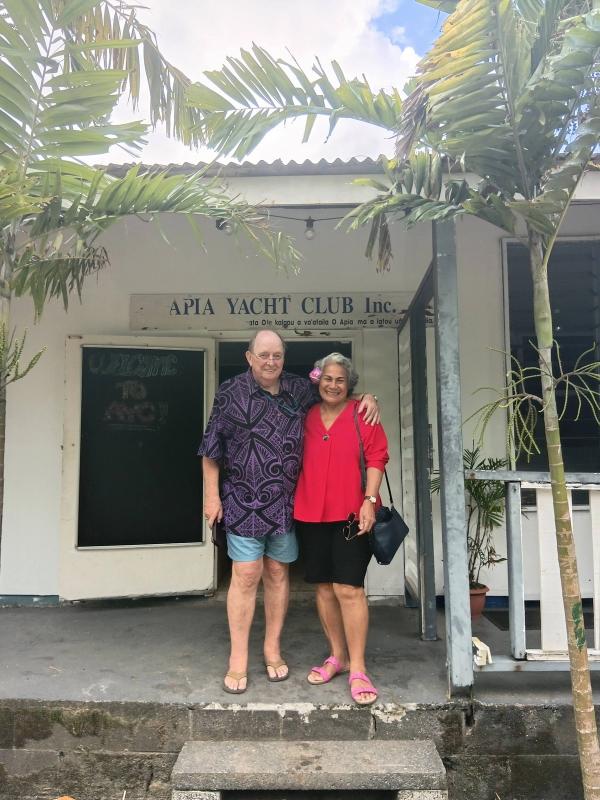
After decades of leading large-scale information systems and digital transformation projects across the Pacific, volunteering in Samoa felt like a natural next step for ICT Digital Transformation Advisor, Andrew Smith.
Having spent 25 years working throughout the region, including many years based in Samoa, the retired Enterprise Architect wanted to use his experience to support long-term development while giving back to a country that had shaped much of his career. “Samoa has given me so much in the past,” he says. “I wanted to give something back.”
Now volunteering with Samoa’s Ministry of Agriculture and Fisheries (MAF) through Volunteer Service Abroad Te Tūao Tāwāhi (VSA), Andrew is helping lay the foundations for digital transformation that will ultimately benefit thousands of farmers and the communities they support. His assignment focuses less on introducing new technology and more on helping people understand how technology can improve how organisations work. “Digital transformation is a little -understood science,” Andrew explains. “I’ve had to take the team on a journey they possibly didn’t want to take, nor fully understood why they needed to.”
Rather than implementing systems himself, Andrew’s role is to guide and advise. He encourages the Ministry to develop sustainable solutions that its people will own and lead long after his assignment ends.

To do this, he follows two guiding principles. The first is the “Kete” approach, where ideas are placed into a shared basket for local colleagues to adopt if they see value in them. The second is the “Two-Foot Rule” approach – if he is no longer learning or contributing in one area, he moves to where he can make the greatest difference.
These approaches reflect the collaborative spirit that underpins VSA volunteering, where lasting impact comes from working alongside partners rather than delivering solutions for them.
The work is ambitious. Building digital capability across more than 300 Ministry staff and approximately 30,000 farmers will take time, and Andrew is realistic about the scale of the challenge.
“At this stage there are very few tangible impacts,” he says. “It’s one thing to say we will empower citizens through digital transformation. It is another thing altogether to build a use case that drives adoption.”
He points to an interesting contrast in Samoa –, while smartphone ownership exceeds 95%, digital banking uptake remains below 5%.
For Andrew, this highlights that successful digital transformation is not simply about technology. It is about building trust, confidence, skills and practical reasons for people to embrace new ways of working.
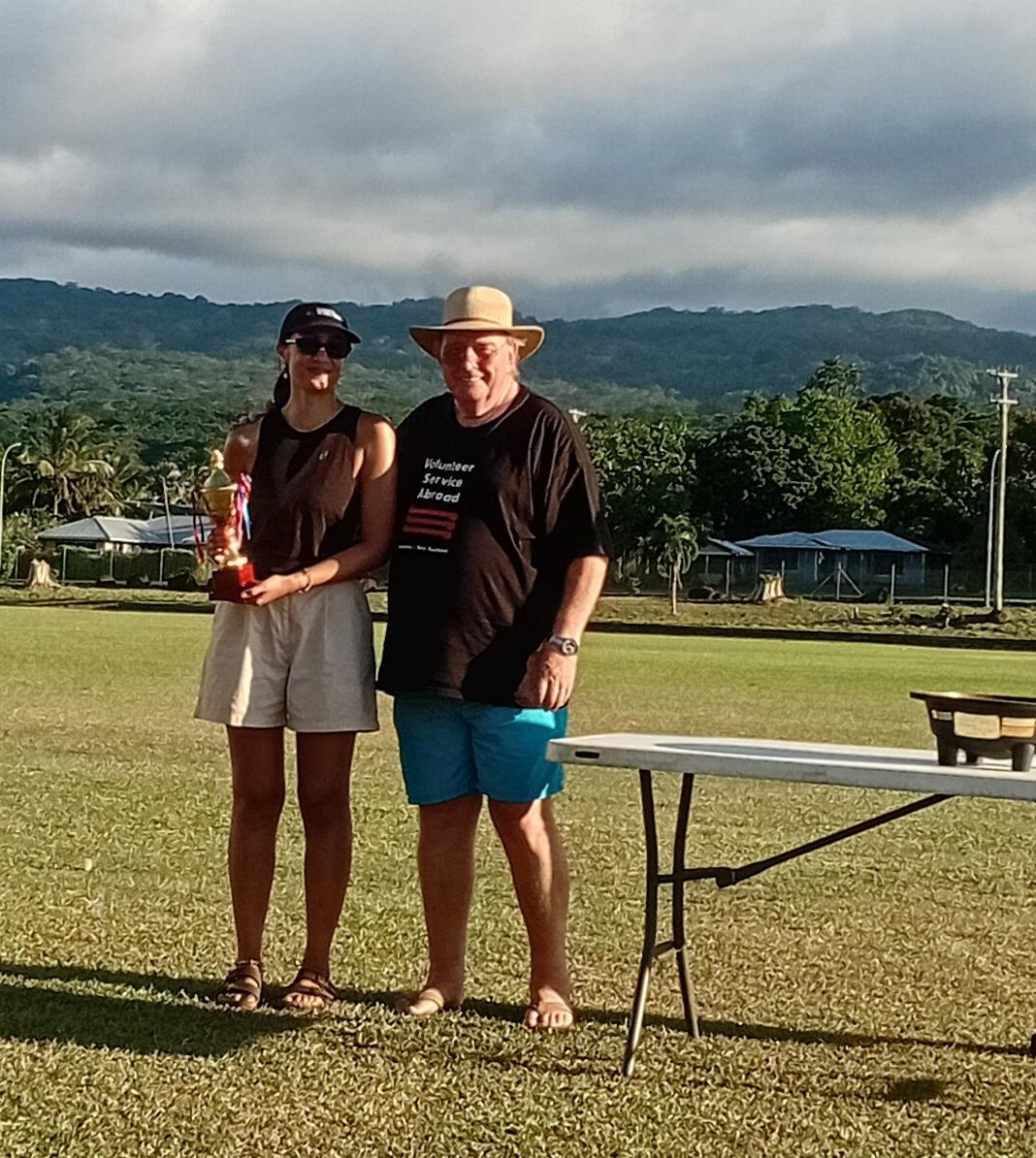
Andrew (right) with fellow VSA volunteer Grace at the ANZAC Day cricket match in Apia.
Like many volunteers, Andrew has also encountered challenges beyond the technical aspects of his role. Introducing new ideas into established systems requires patience, relationship-building and a deep understanding of the local contexts.
Language has also presented an unexpected challenge. While his wife, Faataualofa Smith, is Samoan and speaks the language fluently, and the couple have previously lived in Samoa, many technical concepts simply do not have direct Samoan translations.
“Most computer-based concepts need to be explained in English,” he says. Andrew says that the language evolved in a context where concepts such as computational logic did not exist and therefore does not naturally incorporate terminology for them. Despite these challenges, he believes every assignment offers opportunities to learn as much as you contribute.
Alongside Faataualofa, who is accompanying him during the year-long assignment, he has embraced everyday life in Samoa. The couple have settled comfortably into their community, enjoying fresh local produce, reconnecting with familiar places and appreciating the slower pace of life.
“We have grown closer,” Andrew reflects. “Life is good here. If you accept what is around you and enjoy it without complaining, then life is simpler and less stressful. As they say, ‘fai fai easy.’”
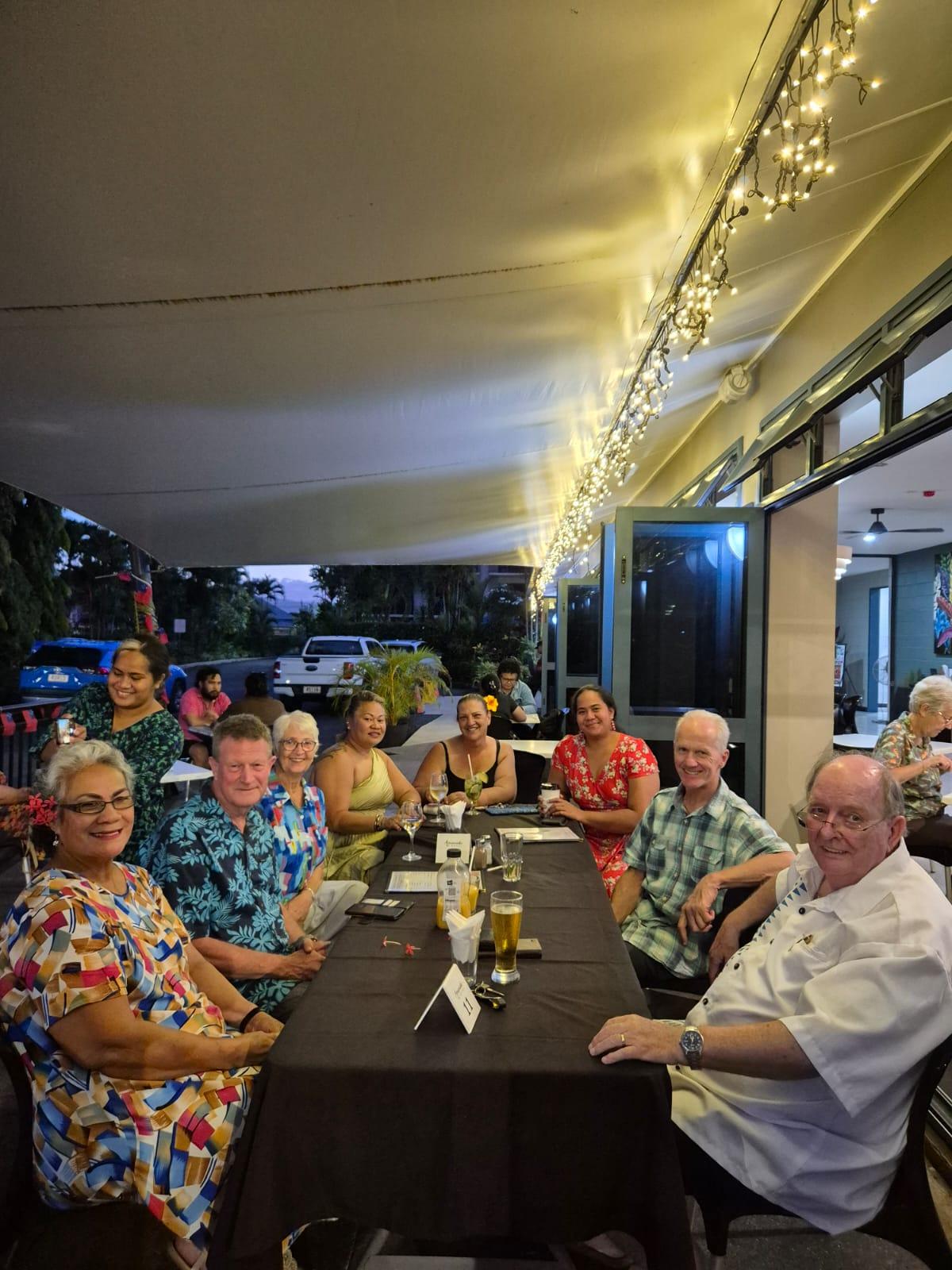
The experience has also reinforced his appreciation for cultural exchange.
“There are good things in every culture,” he says. “Our role as volunteers with VSA is to embrace those strengths and remember that New Zealand has many of the same traits and nuances, only expressed differently.”
This is not the first time the couple have volunteered internationally. Having previously volunteered in Timor-Leste, they understand that development volunteering is as much about personal growth as professional contribution.
“Sharing your skills and experience can be empowering,” he says. “It builds resilience and confidence in your own abilities.”
As he continues working towards long-term digital transformation within the Ministry, Andrew hopes the foundations being established today will continue to grow well beyond his assignment.
His message for anyone considering volunteering is simple: “Step out knowing that you have something different to offer,” he says. “Whatever assignment you are offered, it is an opportunity to take home the good things from the environment you will become immersed in, while leaving behind some of the good things from New Zealand culture. No matter what your skill is, the fact that you care matters most.”