
Grounded in connection: How Chiara is building legal capability in the Solomon Islands
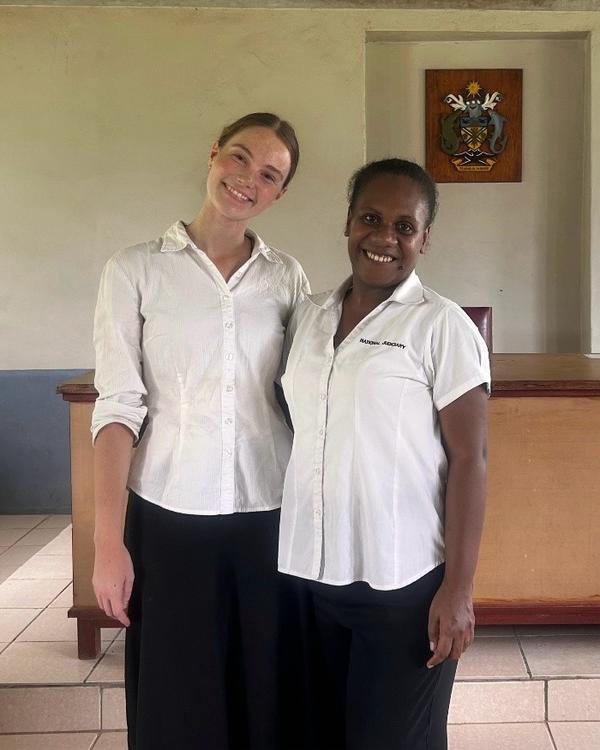
When Chiara arrived in the Solomon Islands as a Legal Research Assistant with the National Judiciary, she came with legal training, a strong academic background and a genuine interest in international development. But she also arrived with something equally important – a willingness to listen, adapt, and ground herself in the environment around her.
A recent graduate of the University of Canterbury with Arts and Law degrees, majoring in International Relations and Politics, Chiara was drawn to legal research because of the way it combines structure with creativity. “Legal research is both creative and systematic,” she explains. “Entering a new legal jurisdiction, with different cultural considerations, resourcing and needs, is a unique opportunity.”
After graduating, she found herself at a familiar crossroads. While she had enjoyed studying law, the traditional legal career path didn’t immediately feel like the right fit. Through Volunteer Service Abroad Te Tūao Tāwāhi (VSA)’s UniVol graduate programme, she saw a different path – one that would allow her to continue developing her legal skills while contributing in a capacity building role.
Now based within the Solomon Islands High Court, no two days look the same. Chiara rotates between teams every two months, working closely with judges’ associates and executive personal secretaries. Her work spans legal research, preparing files, attending hearings, e-filing and one-on-one mentoring with associates and executive personal secretaries focusing on research skills.
The legal matters she supports are wide-ranging, including constitutional questions, customary land appeals, intellectual property and criminal sentencing. It’s intellectually stimulating work, but Chiara is quick to point out that technical legal knowledge is only one part of being effective in this context.
“One of the biggest lessons has been learning to let go of assumptions about how a legal system ‘should’ operate,” she says.
The Solomon Islands legal environment is shaped by its own realities: Pacific and Melanesian legal traditions, customary law, infrastructure limitations, staffing pressures and the practical complexities of delivering justice across a geographically dispersed island nation.
That’s why, for Chiara, becoming grounded in daily life has been just as important as understanding the law. “It was really important to me to speak pijin in my daily life here,” she says. From the moment she leaves home each morning, she makes a conscious effort to communicate in Solomon Islands pijin, chatting with neighbours, taxi drivers, shopkeepers and colleagues. What may seem like a small personal commitment has become one of the most meaningful aspects of her experience.
Her days, she says, are punctuated by spontaneous conversations, shared jokes, and quick check-ins. “There’s a constant thread of conversation and laughter,” she reflects. “That ease in how people connect has been really grounding amongst so much newness.”
Learning the language hasn’t just helped her settle into life socially, but has also directly strengthened her work. In Solomon Islands, relationships matter deeply, particularly in workplace environments where collaboration and trust are essential. Chiara works most closely with judges’ associates and executive personal secretaries, whose behind-the-scenes work keeps the court functioning. “I’m often reminded here that you cannot do anything without relationships,” she says.
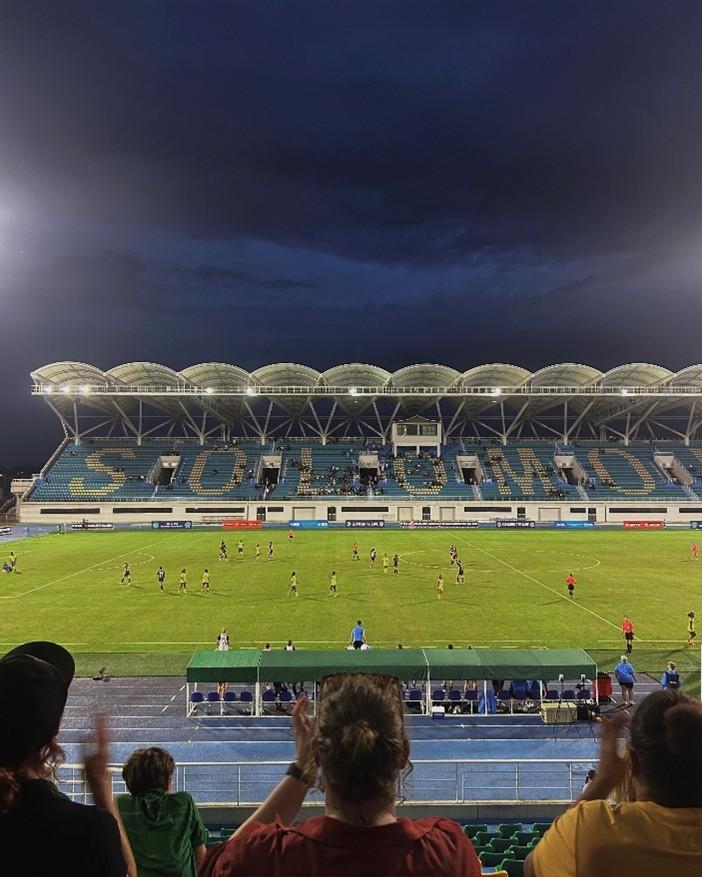
New Zealand vs Solomon Islands Women’s Football World Cup Qualifiers at National Stadium in Honiara
By making the effort to connect in pijin and engage in everyday life, Chiara has built rapport with colleagues in a way that goes beyond formal workplace interaction. That trust creates space for questions, learning and collaboration.
She has already started seeing small but meaningful signs of impact. “When someone asks a question that clearly reflects a line of legal reasoning we’ve worked through together, this is a great sign,” she says. “Over time, those questions become more detailed, and connections begin to form.”
While early days, this kind of incremental capacity building has long-term potential. Strengthening research capability and legal reasoning within court support teams can improve how efficiently and confidently legal matters are managed – an important contribution in a system facing resource constraints and increasing complexity.
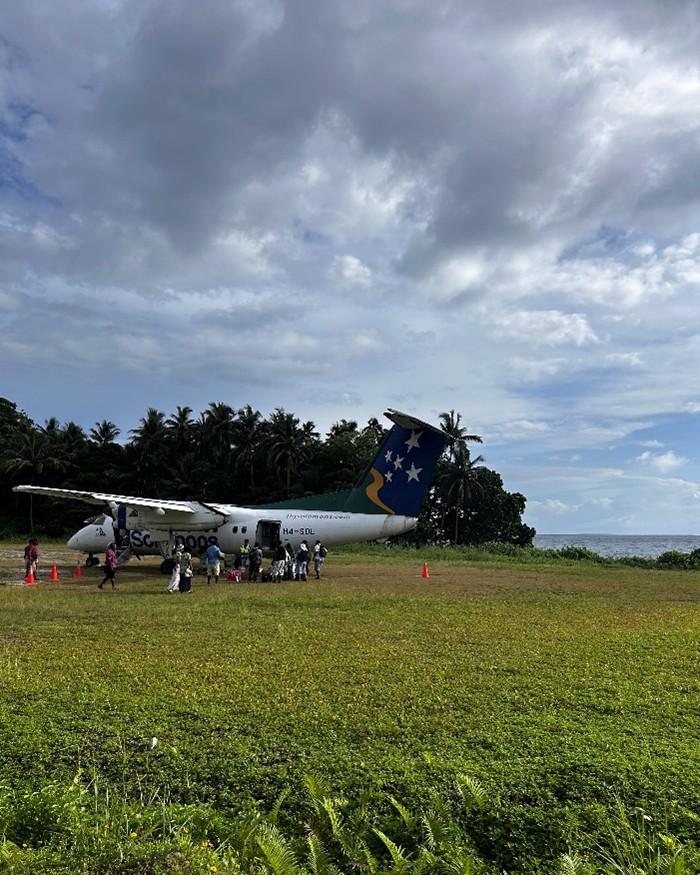
One experience that particularly cemented the importance of relationship-building was a three-week Circuit Court trip to Kirakira in Makira-Ulawa Province. Away from Honiara, the realities of access to justice became even clearer. Provincial legal services often operate in compressed windows, with acute logistical and infrastructure challenges. But the trip also reinforced the human side of legal work. “Spending long days together in court, sharing meals and downtime, and talking through legal issues and our own life experiences created a sense of connection and mutual understanding,” Chiara says.
Those moments built stronger working relationships, making it easier for colleagues to ask questions, explore unfamiliar legal issues, and turn everyday work into practical learning opportunities.
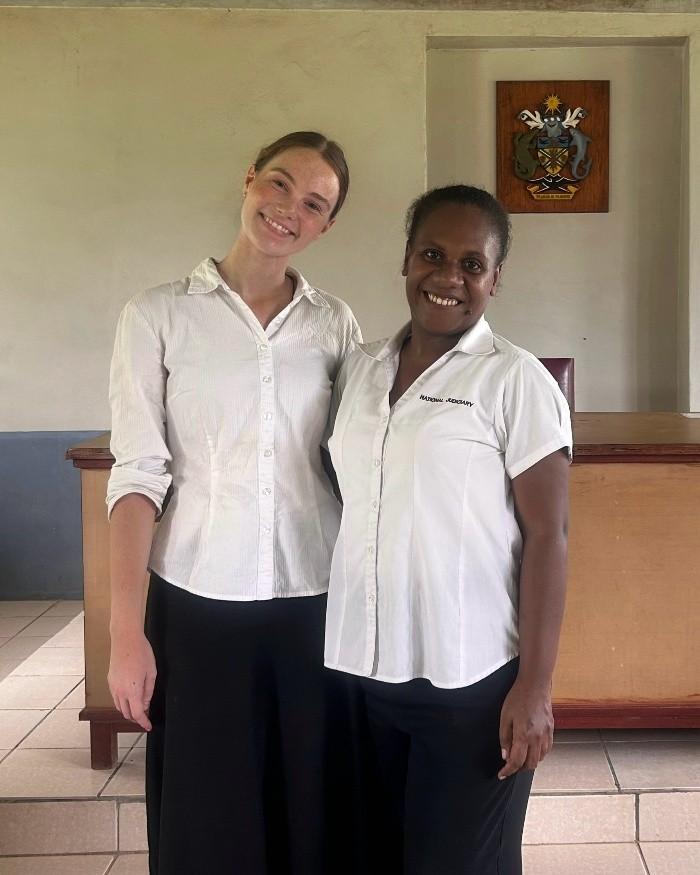
Chiara’s story is a reminder that effective volunteering, and effective legal development work, is not just about expertise. It’s about humility, curiosity and recognising that meaningful impact starts with understanding the people and context around you.
By grounding herself in the daily rhythms of life in the Solomon Islands, speaking the local language and prioritising relationships, Chiara is contributing not just legal knowledge, but something equally valuable: connection. And in a justice system where collaboration is critical, that may be one of the most impactful contributions of all.