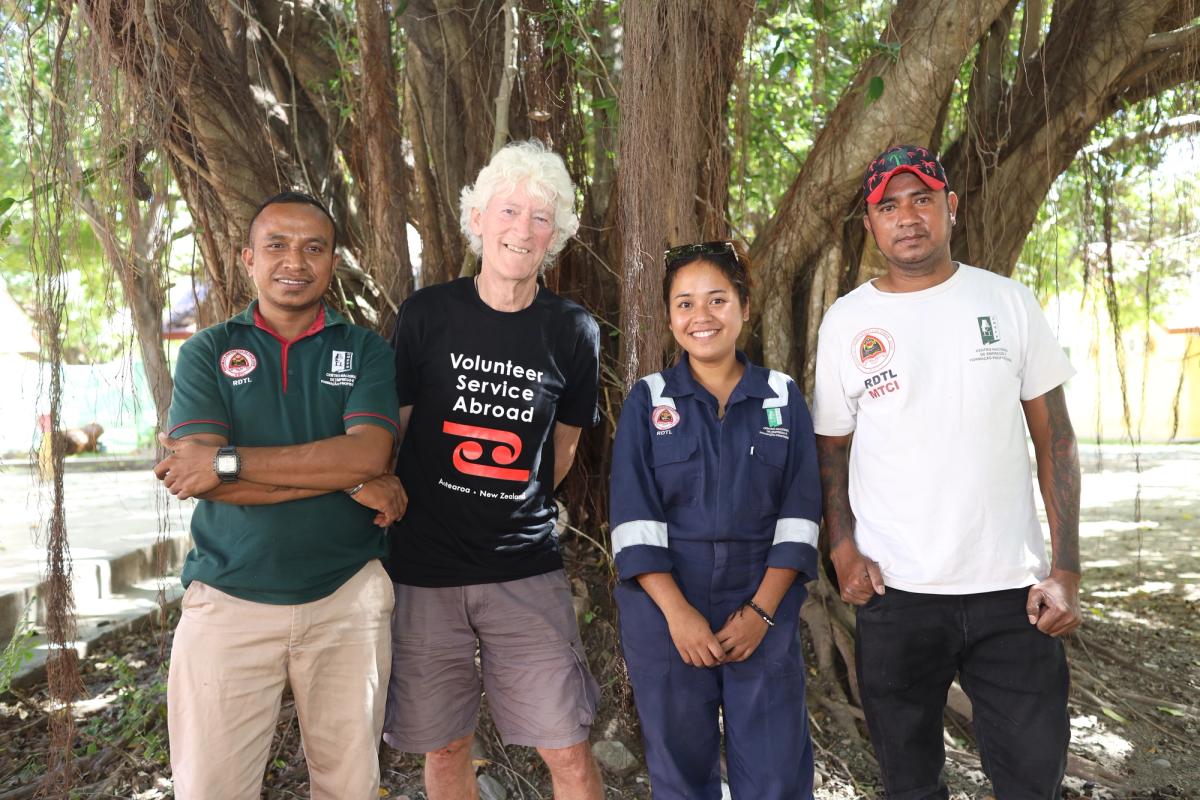
"Every student who gains the skills to build a career creates opportunities that extend to their family and community."
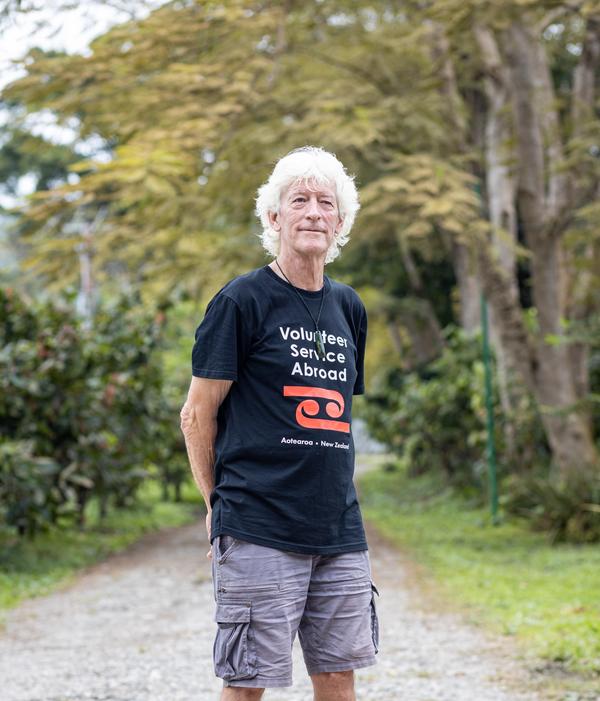
For many young people in Timor-Leste, the chance to learn a trade is the chance to change the course of their future. A qualification can mean secure employment, a steady income, and the ability to support parents, siblings and entire communities. The impact reaches far beyond one person. That is why organisations like the Centro Nacional de Emprego e Formação Profissional (CNEFP), the National Centre for Employment and Training, are so important. Every year, around 160 students enrol in CNEFP’s 12-month programme, gaining practical skills in trades such as carpentry, masonry, welding, plumbing, electrical work, agriculture and hospitality. For many, they are the first in their family to undertake tertiary education.
VSA has been partnering with organisations in Timor-Leste since the country’s early years of independence. Today, VSA volunteers work alongside local partners like CNEFP, strengthening the skills and knowledge of local trainers so they can continue preparing young people for employment long after the VSA volunteer assignment has ended.
The need for these partnerships remains significant. Nearly half of Timor-Leste’s 1.5 million people experience multidimensional poverty, and 44.2% live below the income poverty line. Yet with a median age of just 22.1 years, the country has enormous potential.
While in Aotearoa New Zealand we may be focused on getting ahead, in Timor-Leste it is often about getting a start. In the story below, you’ll meet VSA volunteer Barry Binding, whose role was to work alongside CNEFP’s trainers, sharing practical skills and strengthening systems that will continue to benefit tutors and students for years to come.
Located about 17km west of Timor-Leste’s capital, Dili, CNEFP provides an education that is globally informed and locally relevant. During the first half of the year, students experience a range of trades before specialising in their chosen field during the second half of the programme. For many students, graduating from CNEFP changes not only their own future, but that of their wider family.Once they find work, many are able to send money home to support parents, siblings and their village. Barry’s role was to work alongside CNEFP’s trainers, strengthening their skills, enhancing the curriculum and helping the centre prepare tradespeople who can meet international standards while working within Timor-Leste’s local context and available resources.

Some stools that the carpentry students had built under Barry’s tuition.
Having completed seven volunteer assignments with VSA, Barry understood that lasting change comes through partnership, not instruction. “You can’t tell people what to do. You have to support and guide them to find their own solution. Things don’t go to the script. You have to be able to deal with that.”
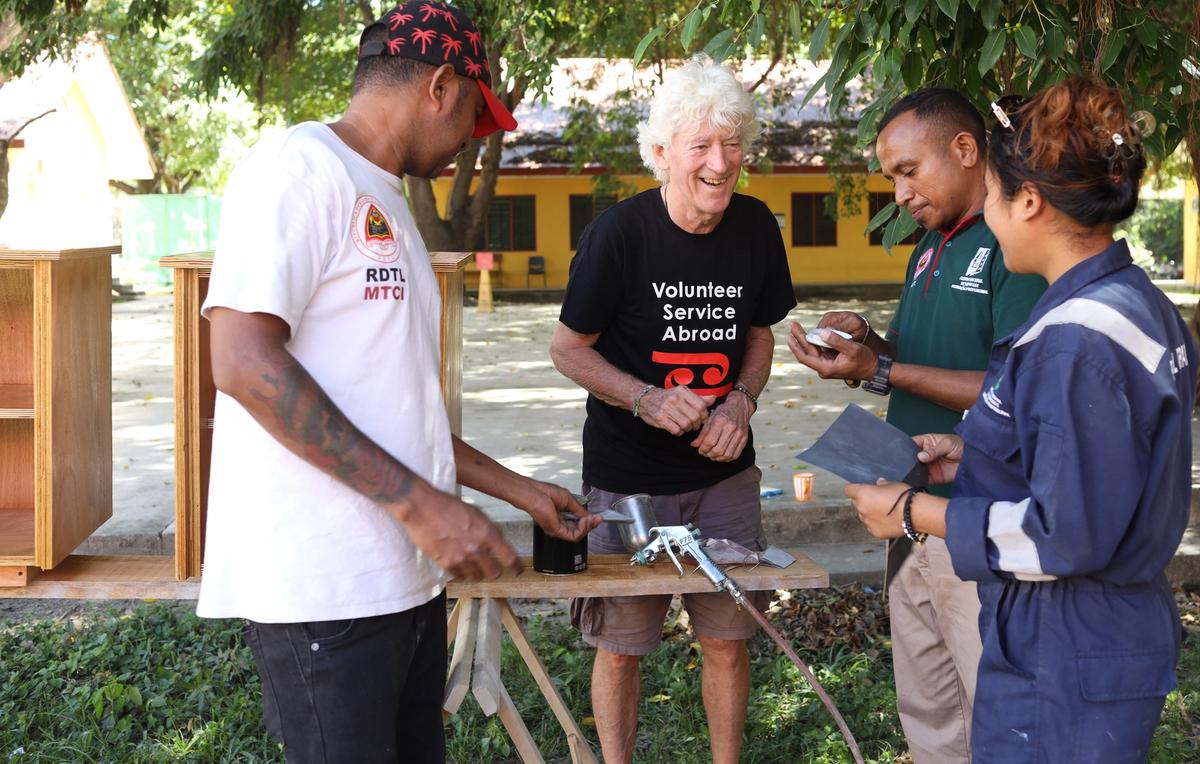
As with most VSA assignments, Barry’s role evolved to meet CNEFP’s priorities. Alongside mentoring trainers, he taught students technical drawing, measuring, scaling and quantity surveying to help them estimate the cost of construction projects. Director Simão Tito Barreto says one of Barry’s greatest contributions was mentoring trainers during the construction of bungalows at the Community Tourism Training Centre in Maubisse. “By working alongside the team on a real construction project, Barry helped improve practical skills, work planning, quality standards, finishing techniques, and problem-solving abilities.”
CNEFP is also a social enterprise. Alongside training local tradespeople, its workshops produce furniture and other products for sale, creating income to support the organisation’s work. Simão says Barry “developed new furniture prototypes and production models that can continue to be used and improved by CNEFP in the future.” Barry focused on designs that could be built using locally available tools and materials. “There are no machines in the villages, so you need the design to be easy.”
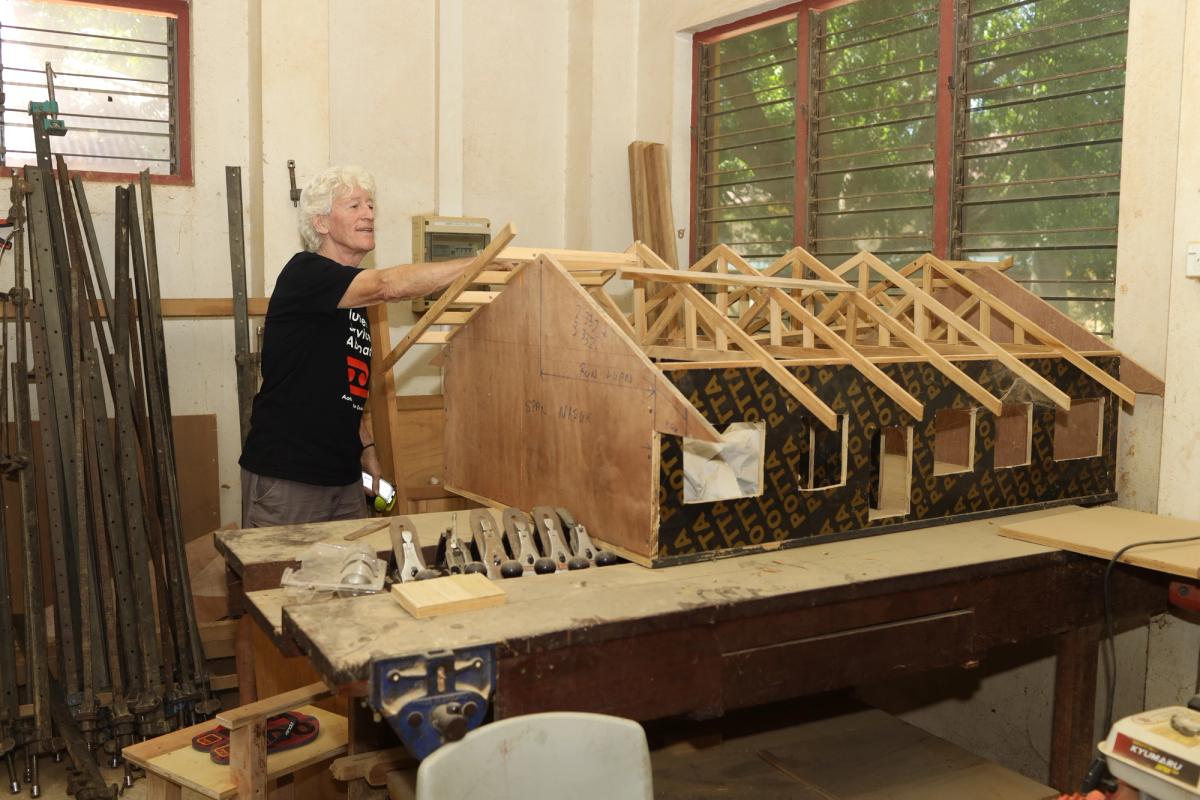
The impact of Barry’s assignment will continue long after his departure. “Barry’s work will continue to benefit CNEFP for many years. The furniture prototypes, technical drawings, production plans, calculations, scale models, teaching materials, finishing standards, and workshop methodologies he developed have all been integrated into our classrooms and production workshops. They will serve as permanent learning resources for future students and trainers and will continue to guide practical training and production activities at CNEFP,” Simão Tito Barreto, Director, CNEFP said.
“What we appreciate most is the practical, hands-on approach that New Zealand volunteers bring to our organisation. They work side by side with our trainers and students, sharing their knowledge with humility, patience, and professionalism while respecting the local context and culture. Rather than simply completing tasks, they focus on building local capacity by mentoring our staff and encouraging critical thinking, innovation, and continuous improvement. This collaborative approach creates lasting impact because it strengthens the skills and confidence of our team. Barry’s dedication, generosity, and willingness to share his expertise have made him not only an excellent technical mentor but also a valued member of the CNEFP family.”
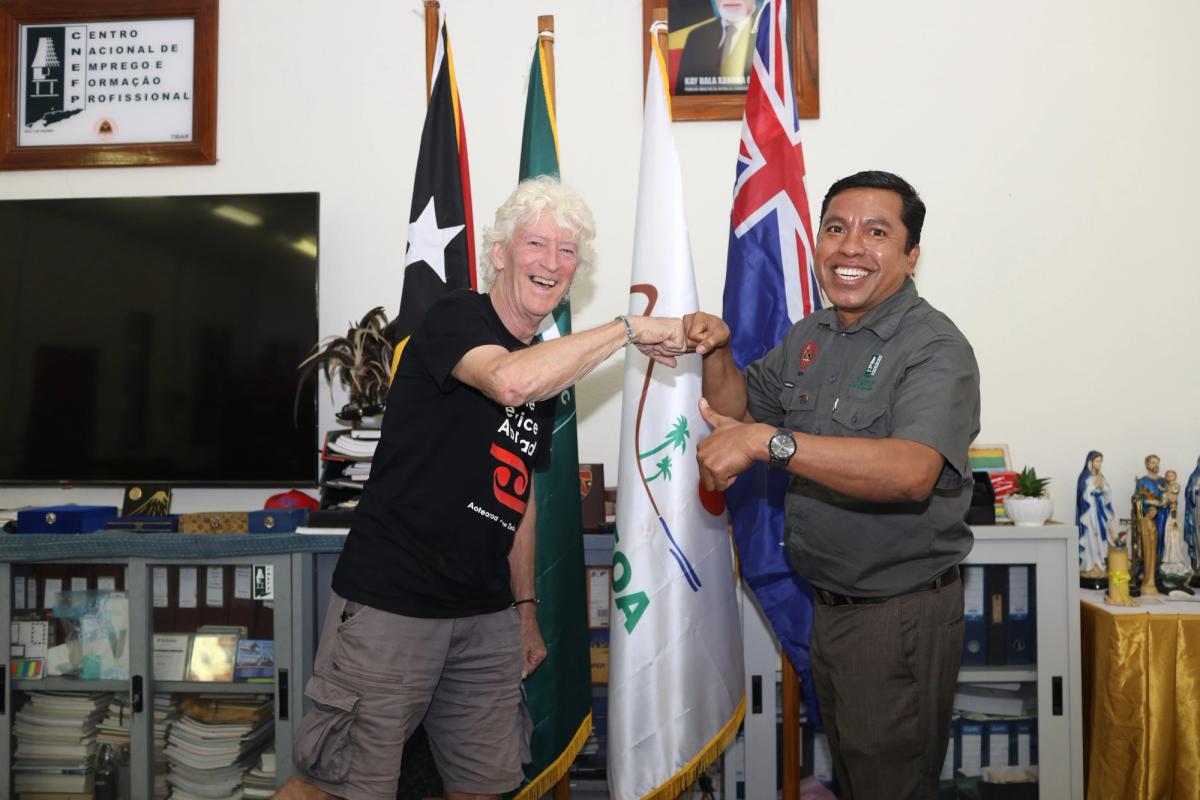
As Barry completed his final VSA assignment, saying goodbye to Timor-Leste and the CNEFP team was emotional. Asked what has stayed with him throughout his years of volunteering, his answer was simple: “I’ve loved working with people.”
He aha te mea nui o te ao? He tangata, he tangata, he tangata.
What is the most important thing in the world? It is people, it is people, it is people.
Every student who gains the skills to build a career creates opportunities that extend to their family and community. Thank you for standing alongside them.