A family reflection through Timor-Leste: Pauline's story
When Pauline Harper travelled to Timor-Leste with Monique Casadebaig from France, the mother of VSA volunteer Diane Clayton, she had the opportunity to experience the place Diane and her husband, Tristram (Pauline’s son) had called home for the previous eight months. Diane is volunteering with Volunteer Service Abroad Te Tūao Tāwāhi (VSA), supporting the sustainable development of Timor-Leste’s tourism sector. Tristram has joined her during her assignment and has also found opportunities to lend his time and skills to local initiatives.
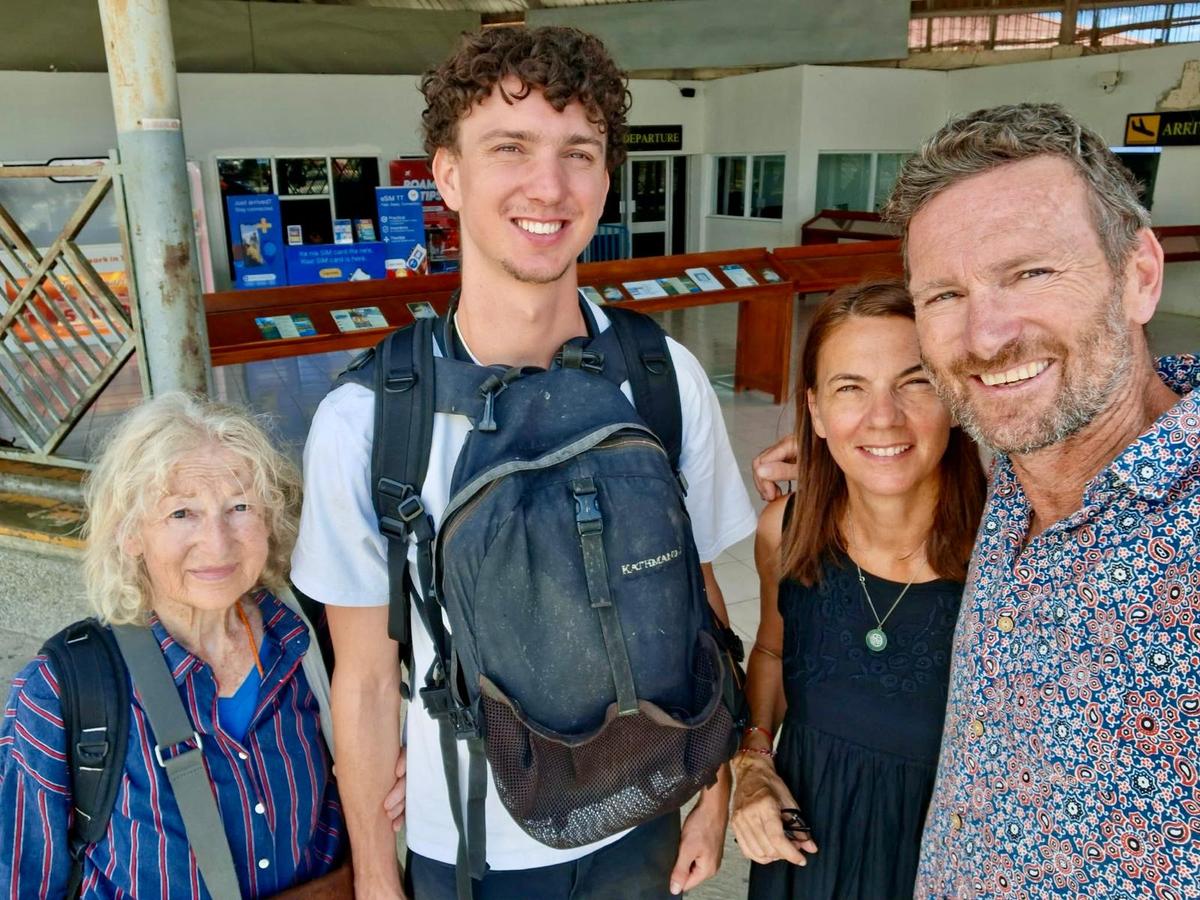
Together with Diane’s mother, Monique, and Diane and Tristram’s son Luka, Pauline spent time exploring Dili and traveling further afield, while getting a glimpse into the everyday life their family had created there. In this guest story, she shares her reflections on their time together – in her own words.
Arriving in Dili
Bali’s Denpasar airport is vast, global and full of travellers excited about their tropical holiday. It was a strange contrast to fly for two or more hours and land at President Nicolau Lobato International Airport in Dili, the capital of Timor-Leste.
Quickly, any comparisons to home faded as the large bronze statue of Nicolau Lobato came into view. A leader in Timor-Leste’s resistance during the Indonesian occupation, his story is part of the country’s long journey towards independence, achieved in 2002.
As my son and daughter-in-law drove us from the airport, they made sure we noticed this centrally placed monument and began sharing some of the history of the country they had called home for the past eight months. As we travelled through Dili, and later into the remote districts further afield, the Timor-Leste flag was everywhere. The stories of Timor-Leste were beginning to unfold for us.
Diane was eight months into her year-long VSA assignment, supporting the sustainable development of the country’s tourism sector. Her husband, Tristram, was supporting her and contributing to local initiatives and opportunities as they arose.
Together with Diane’s mother, Monique, who travelled from France, and Diane and Tristram’s son Luka from Wellington, we suddenly formed a houseful of family. Diane and Tris were excited to show us the places where they worked, explored and relaxed. They were clearly settled and very much at home in their small but comfortable house in Dili.
A visit to the nearby market for fresh vegetables came first. Bananas were bought from a young boy outside the local supermarket – tiny, sweet and remarkably delicious. We ate a lot.
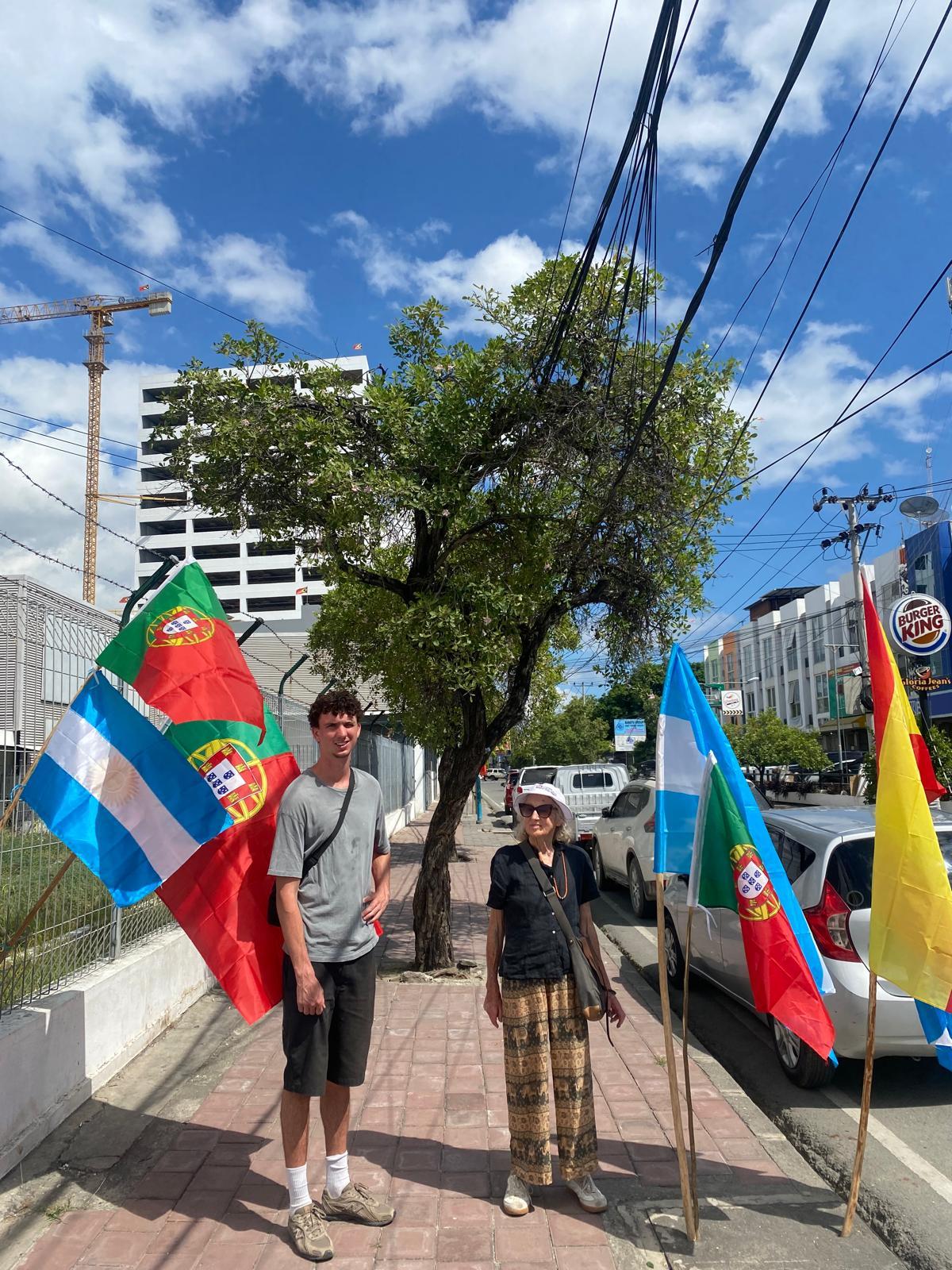
Luka and Pauline strolling through the streets in Timor-Leste.
A sense of pilgrimage
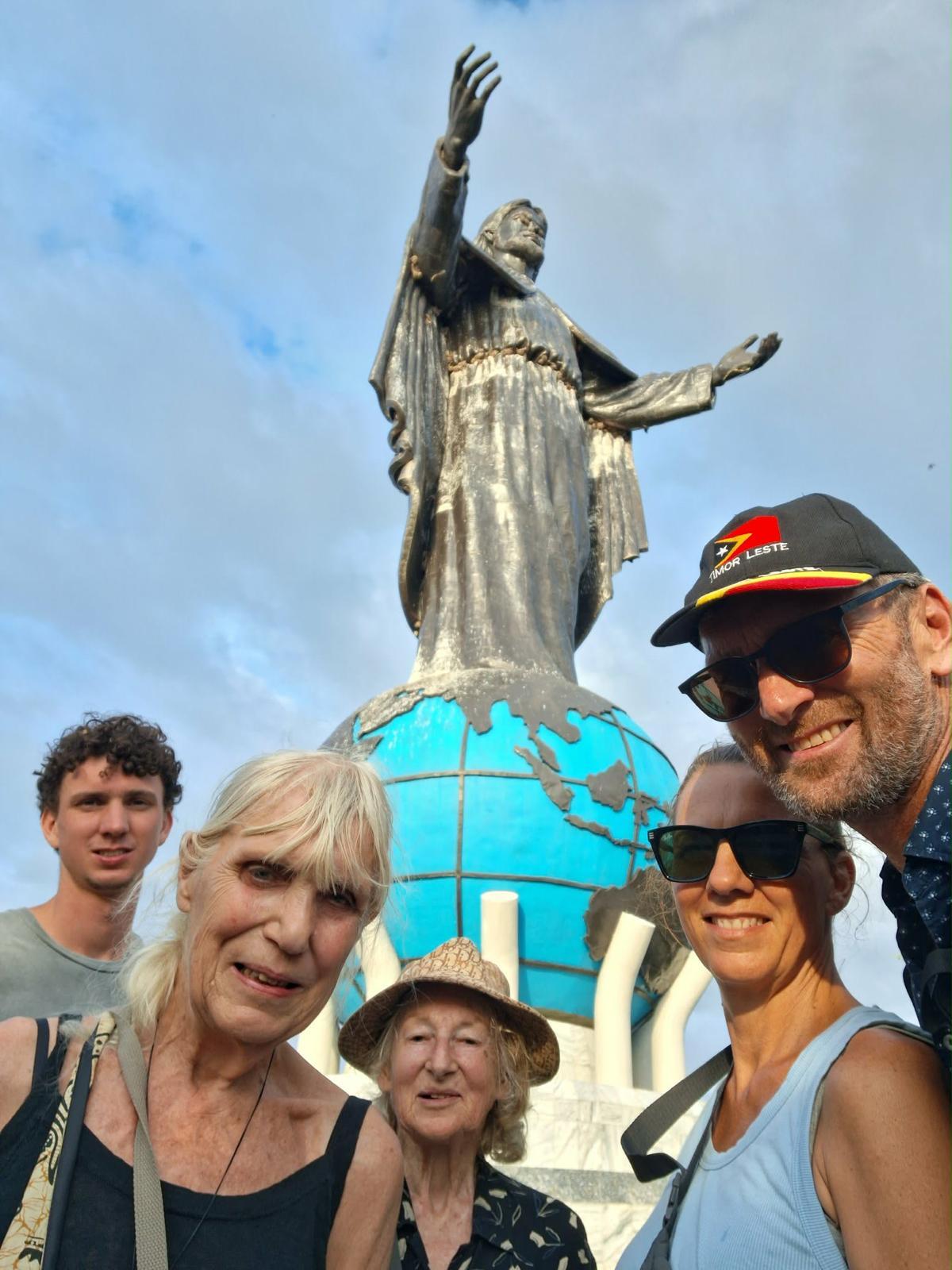
One of our first outings was to Cristo Rei, the 27-metre statue of Christ overlooking the sea at Cape Fatucama. Reaching it involves climbing hundreds of steps, passing the 14 Stations of the Cross along the way. Even for someone with no religious affiliation, I found that a determined sense of pilgrimage seemed to fit the spirit of the journey.
As we climbed, I began wondering what pilgrimage meant for me, and what it meant for members of my family who had chosen to spend this chapter of their lives living and contributing in a country far from home.
By the time we reached the top, with Atauro Island in the distance and Dili Harbour below, I found myself thinking that perhaps pilgrimages are ultimately about our relationships: with ourselves, with our families and friends, and with people whose cultures and experiences may be different from our own.
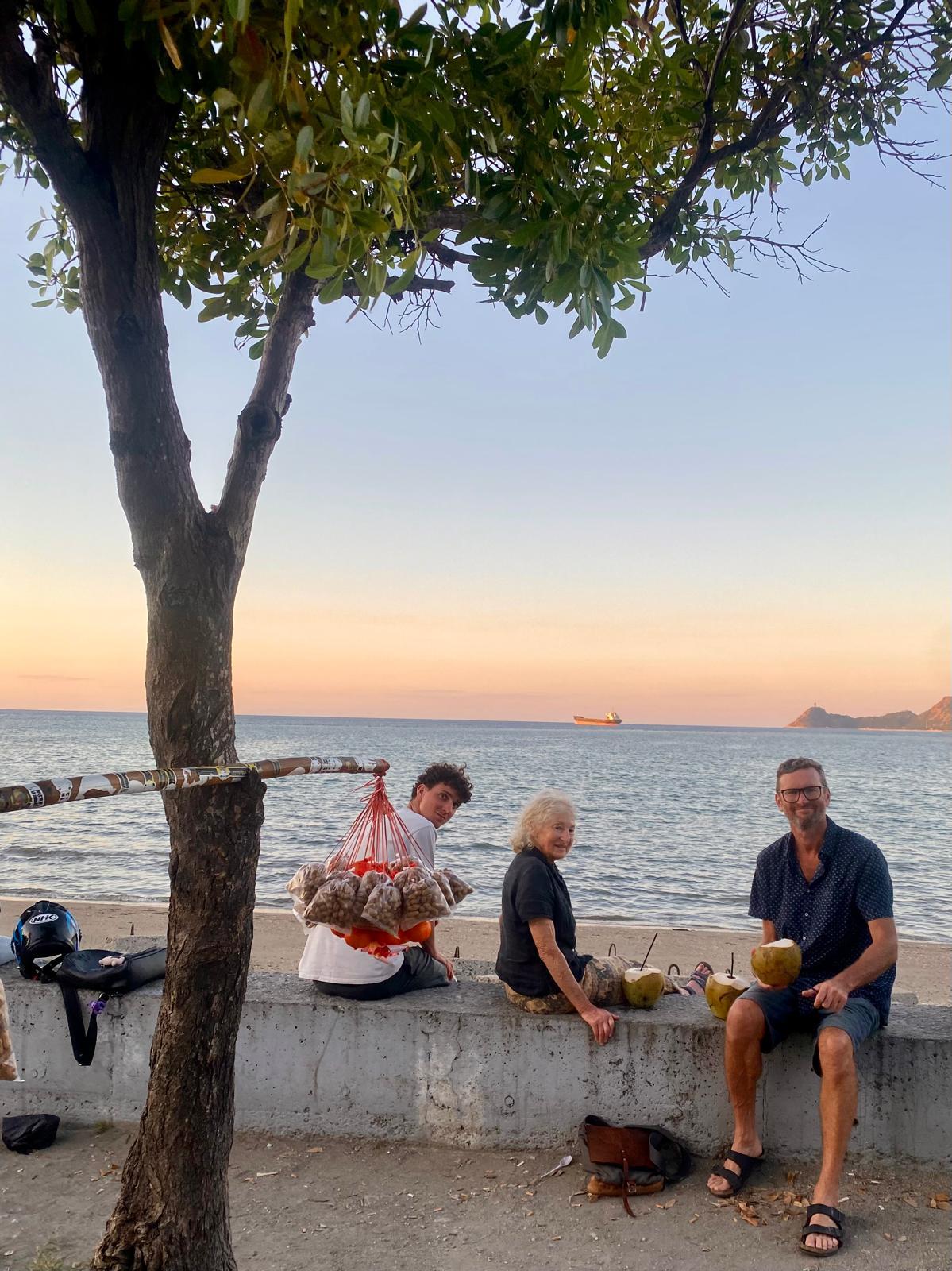
We descended in time for sunset, alongside locals using the tracks and roads for running and exercising. This was when the coconut sellers appeared. With practised machete blows, they opened the tops and handed them over with straws to drink the coconut water. It was a taste that grew on me so much that before long, I wanted a coconut every time the sun began to set.
Everyday life in Dili
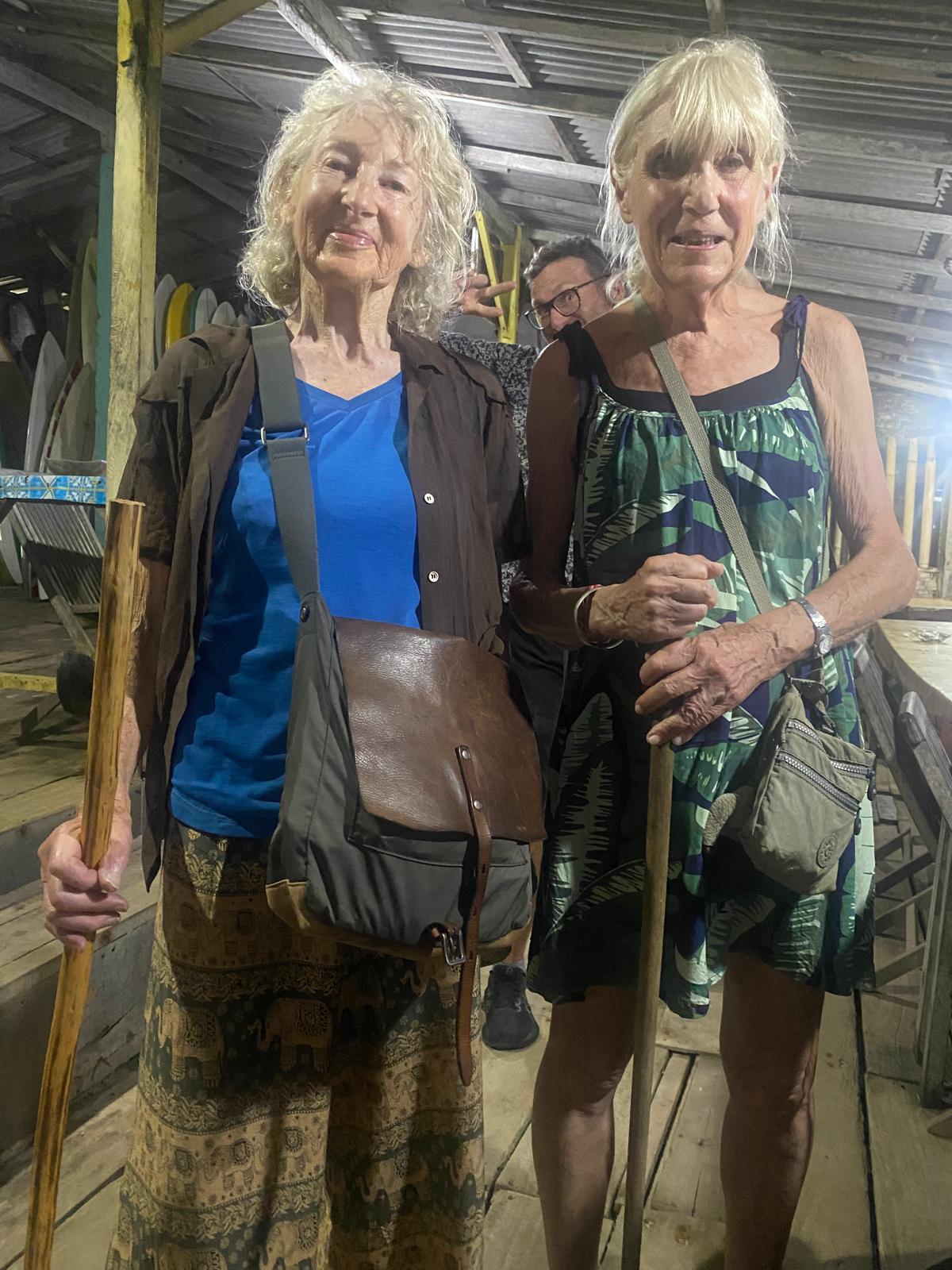
Monique and I are both in our 80s. We’re keen walkers and love adventures, so we took to Dili’s streets with stout walking sticks. What I remember most are the greetings. People we passed would say bondia in the morning and boa tarde in the afternoon, often accompanied by a smile. We came to enjoy our walks through the city, with tropical foliage and brilliant flowers appearing around corners.
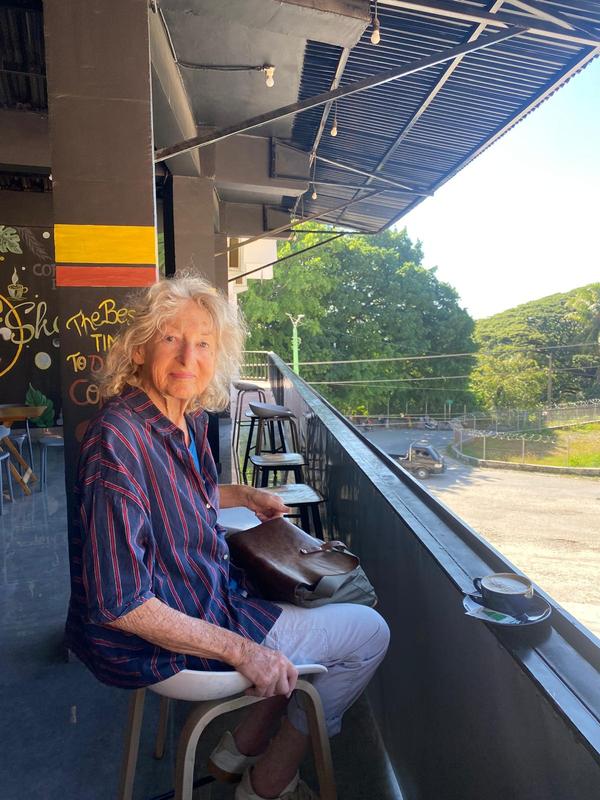
Dili’s cafes were another pleasure. The coffee was excellent and, when a breeze blew in from the sea, they became wonderful places to escape the heat, read, write and, above all, gather as a family. Often others living and working in Dili would join us. These became small daily luxuries.
At Quinta Portugal, a Portuguese Agroforestry Centre, we learnt about the process from picking and drying the coffee cherries through to roasting the beans. Seeing the care and knowledge involved gave us a new appreciation for every cup we drank afterwards.
The road to Ramelau
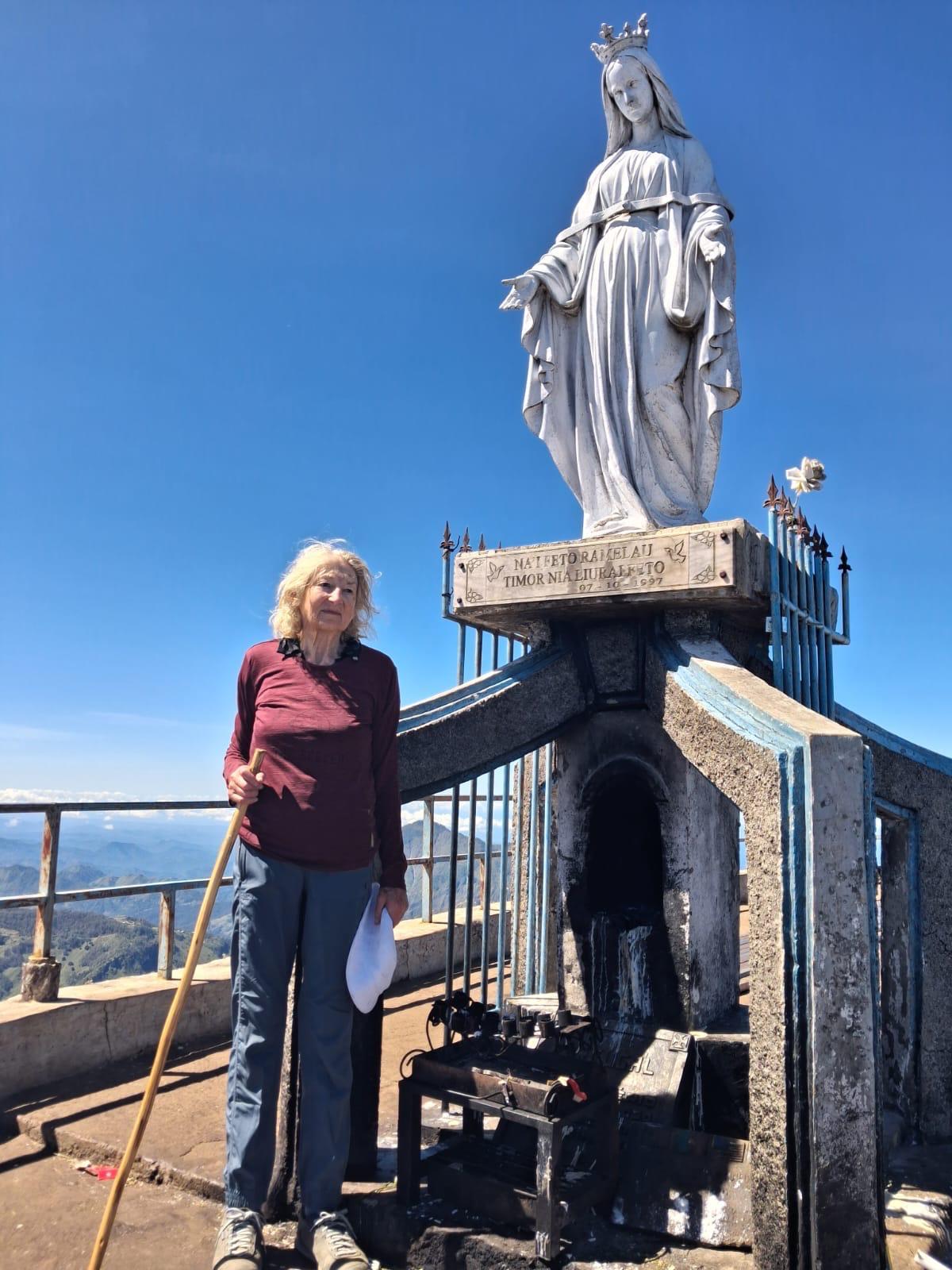
The highest mountain in Timor-Leste is Mt Ramelau, rising to 2,963 metres. At its summit stands a statue of the Virgin Mary, and the mountain holds deep cultural and spiritual significance.
Getting there was an adventure in itself. Travelling by four-wheel drive into the mountains, we encountered rough roads, boulders, slips and waterlogged sections. Tris drove confidently and carefully. Occasionally, we passengers climbed out to lighten the load, and when the bumping became extreme, all we could do was laugh.
One memorable reprieve came high in the mountains when, hungry after a long morning, we stopped at a simple roadside place and were brought wonderful omelettes and steaming cups of coffee. We loved that lunch.
Eventually we reached our guest house in the village of Hato Builico. There was time to walk to the local church and for Luka to play football with children in a nearby field. The cooler mountain air was a welcome change and we sat outside until nightfall.
Many people begin the climb up Ramelau in darkness to reach the summit for sunrise. Diane and Tris had already climbed it twice, but this time they had the “aging ones” with them, and we preferred the visibility of daylight.
We left at 7am with birds singing around us and the views expanding as we climbged. For me, it was hard work. The altitude zapped my energy and at times I needed Luka’s strong hand to cross slippery scree. My family were thoughtful and encouraging: you can always turn back, they reminded me. Just go as far as you can.
But the sense of pilgrimage returned. I wanted to get to the top.
It was a wonderful moment when I rounded the final bend and there was Mary, standing high above us. And then there were the views – wide stretches of this beautiful country unfolding in every direction. Returning to Diane and Tris’s house in Dili afterwards really did feel like coming home.
Experiencing Timor-Leste through tourism
Some of my favourite experiences also gave us a glimpse of the work being done by Timorese people to share their culture, food and environment with visitors.
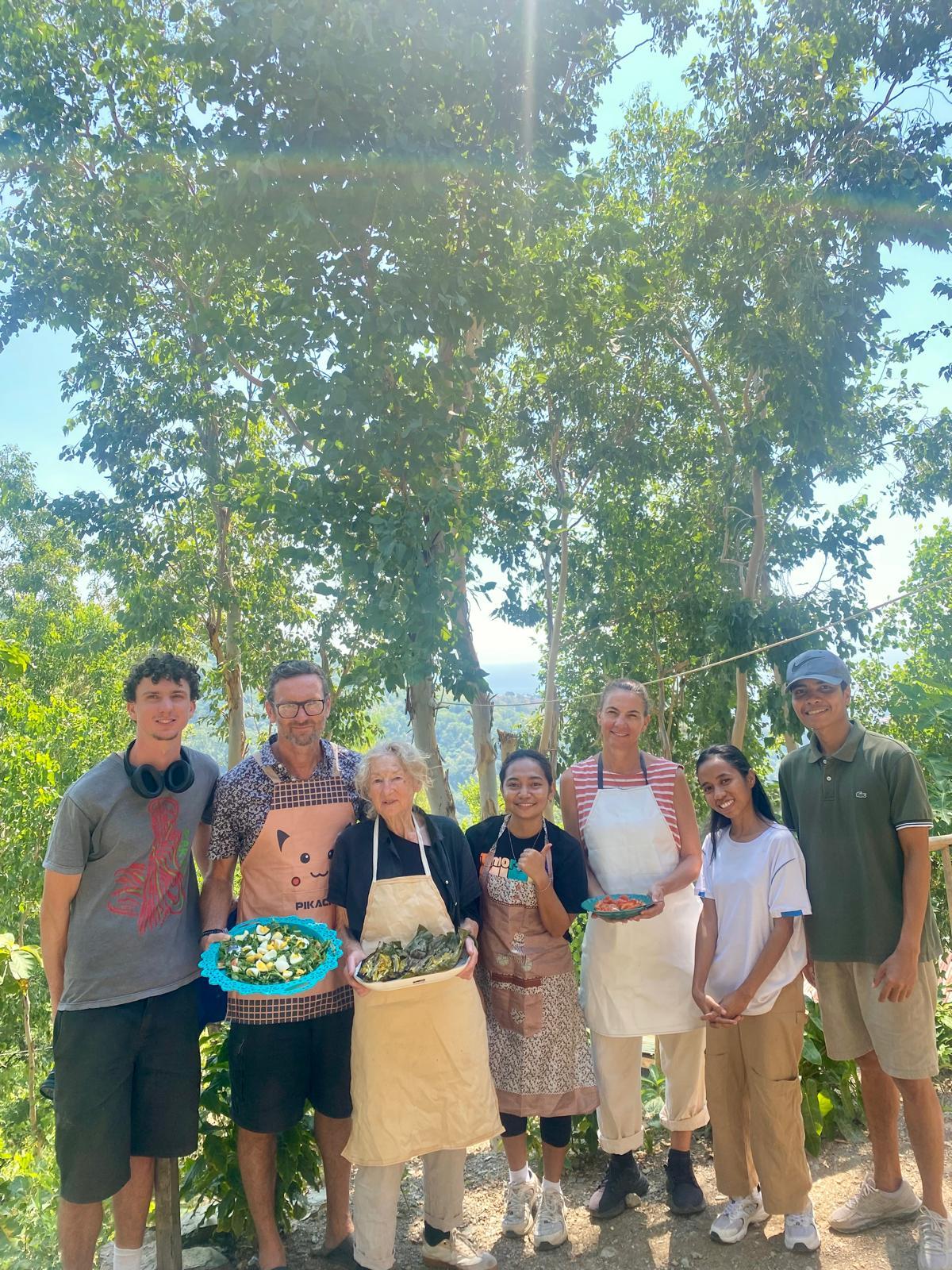
One day we travelled into the hills of Dili for a cooking class organised through a local youth tourism initiative run by Timorlivingtour, a tourism initiative supporting young Timorese people to gain experience and skills in the tourism industry.
Our task was to prepare fish wrapped in banana leaves and grilled over an outdoor fire. Under our teacher’s guidance, we chopped lemongrass, tamarind, basil, garlic, chili and ginger before pounding everything into a spicy marinade. Our banana-leaf wrapping may not have been the most accomplished, but once the parcels were grilled, they became a substantial delicious lunch. We were very proud of our Timorese cooking achievement. Another highlight was Atauro Island, around 25 kilometres from Dili and known for its extraordinary marine environment. We stayed in a thatched cottage with the ocean on our doorstep. Luka had his first scuba-diving lesson and was able to experience some of the coral reef below.
We visited markets too, admiring beautifully woven tais – Timor-Leste’s traditional textiles – alongside baskets, jewellery and other locally made crafts. Experiences like these helped us understand more about the skills, traditions and natural environment that make this country so distinctive.
Experiencing Timor-Leste through tourism
Some of my favourite experiences also gave us a glimpse of the work being done by Timorese people to share their culture, food and environment with visitors.
One day we travelled into the hills of Dili for a cooking class organised through a local youth tourism initiative run by Timorlivingtour, a tourism initiative supporting young Timorese people to gain experience and skills in the tourism industry.
Our task was to prepare fish wrapped in banana leaves and grilled over an outdoor fire. Under our teacher’s guidance, we chopped lemongrass, tamarind, basil, garlic, chili and ginger before pounding everything into a spicy marinade. Our banana-leaf wrapping may not have been the most accomplished, but once the parcels were grilled, they became a substantial delicious lunch. We were very proud of our Timorese cooking achievement. Another highlight was Atauro Island, around 25 kilometres from Dili and known for its extraordinary marine environment. We stayed in a thatched cottage with the ocean on our doorstep. Luka had his first scuba-diving lesson and was able to experience some of the coral reef below.
We visited markets too, admiring beautifully woven tais – Timor-Leste’s traditional textiles – alongside baskets, jewellery and other locally made crafts. Experiences like these helped us understand more about the skills, traditions and natural environment that make this country so distinctive.
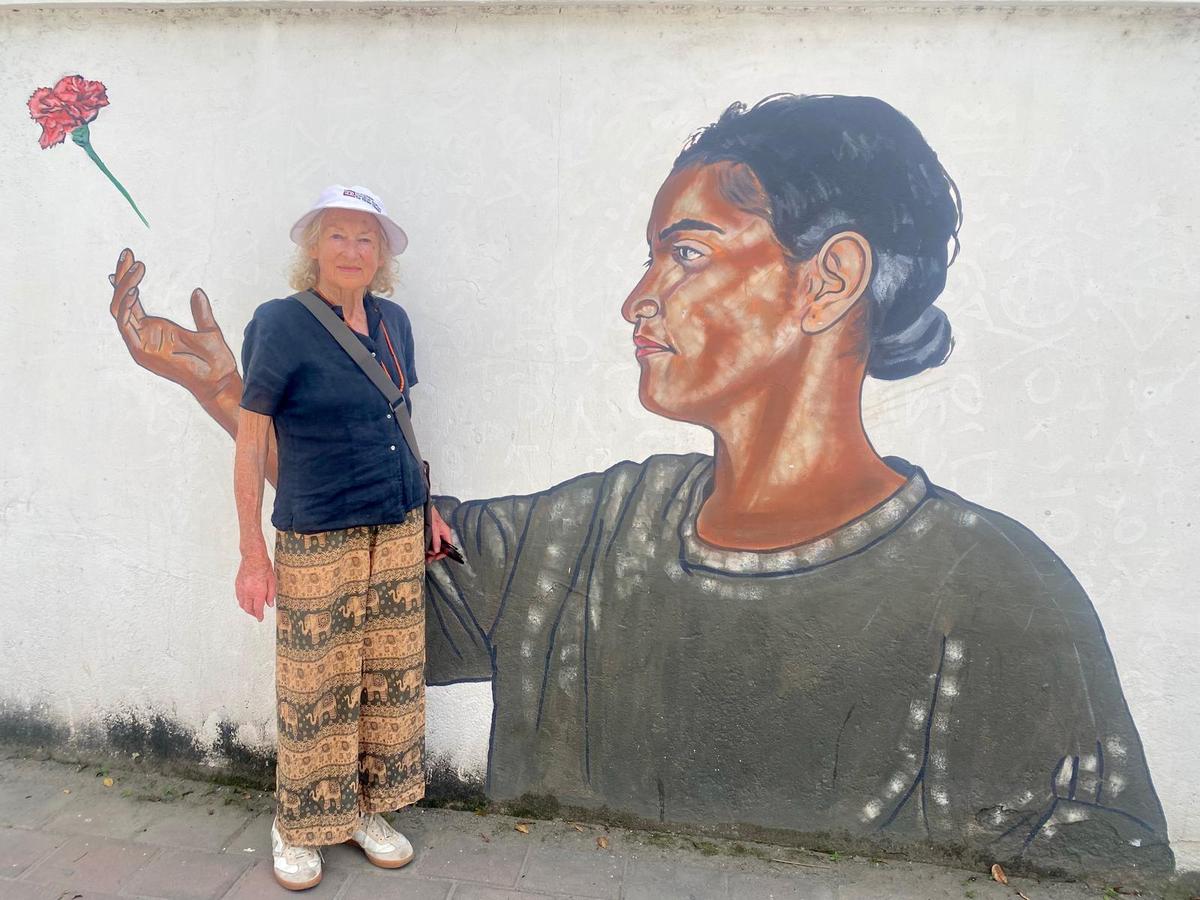
Pauline in front of a painted mural in Timor-Leste.
Looking back, and forward
During my morning walks in Dili, I often passed monuments recalling Timor-Leste’s recent history. One that stayed with me commemorates the victims of the Santa Cruz massacre of 12 November 1991, a defining event during the struggle for independence.
It was impossible to spend time in Timor-Leste without becoming aware of how present that history remains. But alongside those reminders of the past, we experienced a country looking forward – through the people we met, the places we visited and the initiatives we saw taking shape.
For me, this journey began as a chance to visit family and see the life Diane and Tris had made far from home. It became something much richer.
From climbing mountains and cooking together to morning walks, shared coffees and conversations, we had the privilege of experiencing a small part of the country they had come to know.
And perhaps that is what my Timor-Leste pilgrimage ultimately became: time with family, an opportunity to listen and learn, and a deeper appreciation for a place whose stories were only beginning to unfold for me.